Key Takeaways
- The PCA protocol was published in 2023 to standardise spray foam property assessments.
- It provides an objective, independent framework for inspecting foam-affected roofs.
- The PCA maintains a register of surveyors qualified to carry out protocol inspections.
- Reports are increasingly considered by some lenders in low-risk cases — but acceptance is not universal.
- A PCA inspection is the right first step before any removal decision — it establishes facts.
- If the lender requires removal, the PCA report guides the scope and confirms the pre-removal condition.
What the PCA Protocol Is
The Property Care Association (PCA) is the UK trade body for the property care industry, covering damp-proofing, timber preservation, and related specialisms. In 2023, in response to the widespread spray foam problem in UK homes, the PCA published a formal Spray Foam Inspection Protocol — a standardised methodology for assessing properties where spray foam has been applied to the roof structure.
Before this protocol existed, spray foam assessments were inconsistent. Different surveyors used different approaches, produced reports in different formats, and reached conclusions on different bases. Lenders receiving these reports had no consistent framework against which to assess them, making case-by-case consideration difficult.
The PCA protocol changed this. By establishing a standard methodology and a register of surveyors trained and qualified to work to it, the PCA gave lenders a consistent, independent document they could apply judgement to. It is now the industry-standard tool for assessing spray-foam-affected properties.
What the Inspection Covers
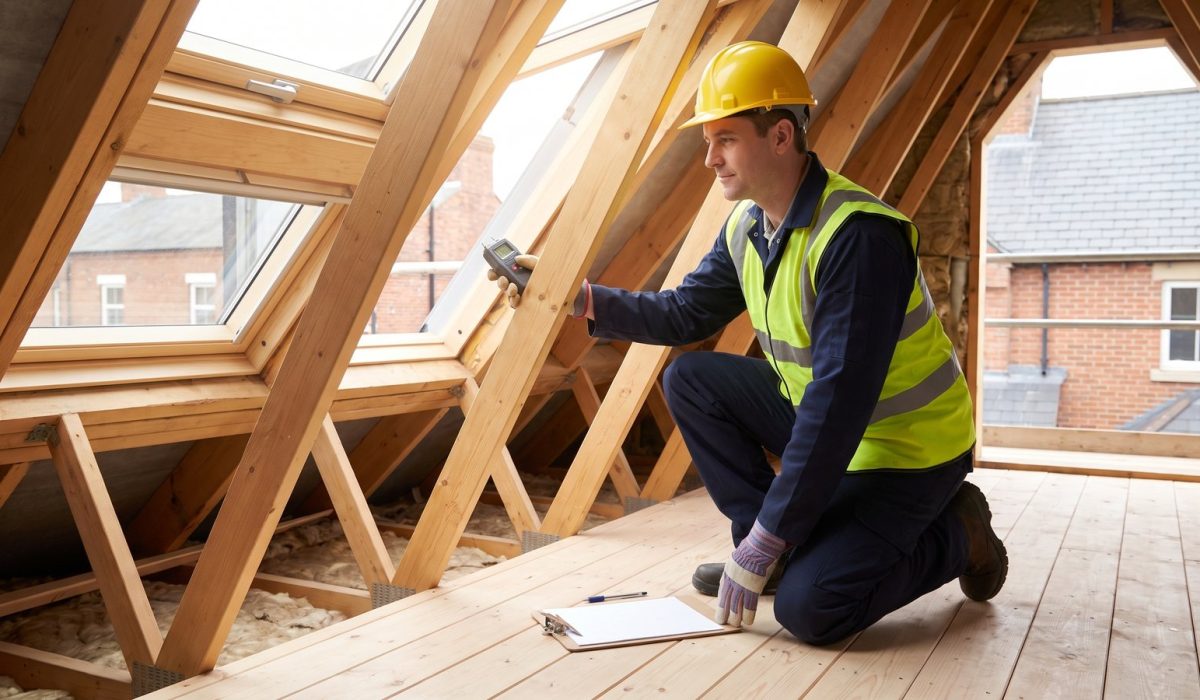
A PCA-protocol inspection, conducted by a registered surveyor, covers the following key areas:
Foam type identification. Open-cell or closed-cell — and the specific product where identifiable. This establishes the baseline risk profile and informs removal cost estimates.
Installation assessment. The surveyor assesses the quality and method of the original installation: thickness, coverage, any gaps or areas of partial application, proximity to the eaves, and how the foam relates to the ventilation arrangements.
Timber condition. The surveyor assesses accessible roof timbers for visual signs of moisture damage, discolouration, soft spots, mould growth, or early rot. Moisture-meter readings are taken at accessible points. This is the critical structural assessment — and it is precisely what an ordinary valuation surveyor cannot do through the foam.
Ventilation assessment. The inspector evaluates the ventilation arrangements — whether eaves ventilation is clear or blocked, whether any ventilation void above the foam is maintained, and whether the roof’s moisture management function is likely to be working.
Risk classification. The report concludes with a risk classification — typically low, medium, or high risk — based on the combined assessment of foam type, installation quality, timber condition, and ventilation.
Photographs and documentation. A properly produced PCA-protocol report includes photographic evidence and a detailed written record of findings.
The Register of Surveyors
The PCA maintains a register of surveyors who have completed the relevant training and are qualified to carry out inspections to the PCA Spray Foam Inspection Protocol. You can search the register on the PCA’s website (pca.org.uk).
Using a surveyor from the register matters for two reasons. First, it ensures the inspection is carried out to the standardised protocol, producing a report in the format and with the methodology that lenders are familiar with. Second, it provides a degree of accountability — PCA-registered surveyors are subject to the PCA’s professional standards.
A report produced by an unregistered inspector — or produced to a different methodology — may not carry the same weight with lenders.
How Lenders Treat the Report
This is the key practical question. As of June 2026:
Some lenders will consider proceeding without removal if presented with a PCA-protocol inspection report showing a low-risk outcome — sound timber, correct installation, adequate ventilation, no evidence of moisture damage. This represents meaningful progress from the earlier binary “refuse all foam” position.
Many lenders continue to require removal regardless of inspection outcome. Their lending criteria do not yet provide for acceptance on the basis of an inspection report alone.
The landscape is evolving. As the protocol becomes more established and as the industry gains more experience with the outcomes of PCA-rated properties, lender acceptance is expected to gradually improve. But it has not yet reached the point where a low-risk PCA report guarantees a mortgage from any specific lender.
A specialist mortgage broker who works regularly in this space has current, real-time knowledge of which lenders are currently accepting PCA reports and in which scenarios. This intelligence is far more reliable than any published list.
Inspection vs Removal: Deciding Your Route
The PCA inspection and professional removal are not mutually exclusive — they serve different purposes:
If you are uncertain of the risk: inspect first. The PCA report tells you objectively whether removal is urgently needed or whether the risk is genuinely low. Acting without this information means either unnecessary expenditure on removal, or ignoring a real structural risk.
If the inspection shows low risk: explore the mortgage market with the report in hand, via a specialist broker. You may find a lender who will proceed without removal.
If the inspection shows medium or high risk: removal is the clear next step. The PCA report then serves as the documented baseline — confirming the pre-removal condition and guiding the scope of removal work.
If your lender requires removal regardless: the inspection still serves a purpose: it establishes the objective condition of the roof before removal, which is useful context for the removing firm and for the post-removal RICS certificate.
The Bottom Line
The PCA Spray Foam Inspection Protocol is the right starting point — always. It gives you objective facts, standardised documentation, and the basis for an informed decision. Whether that decision is then “proceed with a mortgage lender” or “proceed to removal,” it should follow from evidence.
Book an independent PCA-protocol inspection — the first, most important step.
This is general information, not financial advice — please consult a qualified mortgage broker about your circumstances.
Related reading: Do you always need to remove spray foam? · Spray foam removal certificate: what it proves · Mortgage declined due to spray foam? Your next steps