Key Takeaways
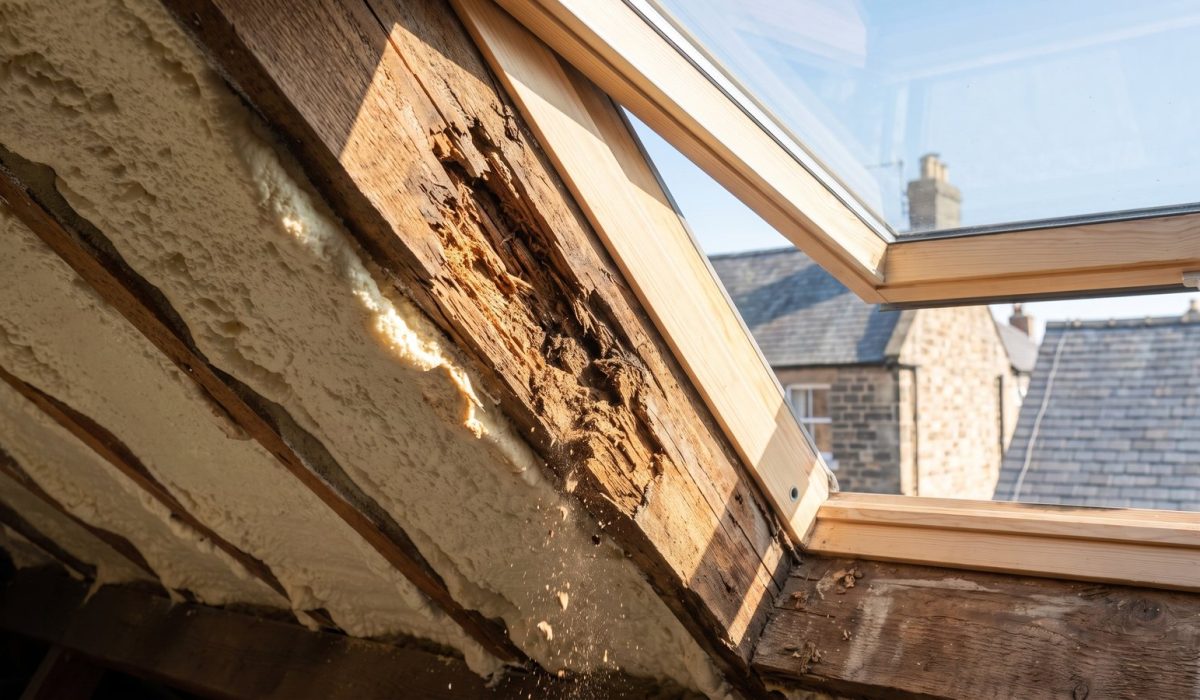
- Foam bonded to rafters conceals timber condition from surveyors — decay can progress unseen beneath it.
- Trapped moisture from poor ventilation is the primary mechanism driving rot development under foam.
- Rot can develop without any visible ceiling damp or surface signs.
- Both wet rot and dry rot can occur in foam-affected roofs.
- Removal reveals the true state of the timber — and earlier action is significantly cheaper than later.
- An independent PCA-protocol inspection is the right first step to assess risk.
Why Foam Hides Timber Condition
Spray foam applied to the underside of roof rafters does not sit loosely on the surface — it bonds chemically and mechanically to the timber. Once cured, removing it requires deliberate, skilled effort. This strong bond means the foam effectively encases each rafter in a protective-looking layer that, to the eye, appears to be simply insulation.
From a surveying perspective, this is a fundamental problem. RICS guidance on spray foam properties is explicit: where foam prevents adequate visual and physical inspection of the structural timber, the surveyor must report that limitation. They cannot tap the wood, probe it with a blade, or assess its surface condition. Any decay occurring beneath the foam surface is, for all practical purposes, invisible to a standard survey.
This is not a hypothetical concern. A proportion of foam-affected properties that have been through the removal process have revealed timber in various stages of decay — damage that was entirely invisible at the point of survey and would have continued to progress without intervention.
How Rot Develops Under Foam
The mechanism is related directly to the condensation cycle described in our condensation and moisture guide:
- Foam seals the ventilation void in the roof, preventing moist air from escaping.
- Condensation forms on the cold surfaces within the roof structure — including the foam-to-timber interface.
- The timber’s moisture content rises above the safe threshold (typically above 20% by weight).
- Rot fungi establish themselves in the wet wood.
- The fungi break down the wood’s cellular structure, reducing its strength.
Two types of rot are relevant in this context:
Wet rot (caused by various Coniophora species and others) occurs where timber is persistently wet — moisture content sustained above 20–30%. It is characterised by dark, soft, spongy wood that may smell musty. It stops developing when the moisture source is removed and the timber dries out.
Dry rot (Serpula lacrymans) is more serious. Despite its name, it initiates in wet conditions but can spread into drier timber areas. It produces distinctive orange-brown fruiting bodies (sporangia) and can spread through masonry and across dry timber, making remediation more complex and expensive.
Warning Signs — What to Look For
Given that foam conceals the most at-risk surfaces, the observable warning signs of rot under foam are indirect:
Musty or earthy smell in the loft or upper rooms — particularly in cold or damp weather.
Ceiling staining — yellowy-brown marks on plasterboard ceilings below the roof slope, appearing gradually rather than suddenly after a specific rain event.
Soft or spongy timber in accessible loft areas — areas near the hatch, at the gable ends, or near the ridge that are not foam-covered can be checked with a thumbnail or blade.
Discoloured foam — where the foam is visibly stained, soft, or pulling away from the timber, moisture may have penetrated the bond.
Orange or white growth visible at loft edges or around the foam boundary — this can indicate dry rot establishing.
None of these signs are definitive on their own. Their absence is also not a guarantee. Rot beneath foam can develop completely without any visible surface indicators.
Why a Surveyor Cannot See It
This bears repeating because it is central to the mortgage problem: a standard surveyor — and even an experienced independent property inspector — cannot see or assess timber that is encased in spray foam.
The assessment requires removing the foam from a sample of timbers, or at minimum accessing representative areas, to observe and probe the surface. This is what the PCA Spray Foam Inspection Protocol (2023) is designed to address: it sets out the methodology for an inspector to document foam type, assess accessible timbers, and classify the risk level.
Even a PCA-protocol inspection cannot guarantee a complete picture of hidden damage — but it is the industry-standard tool for getting as close to that picture as possible without committing to full removal.
How Common Is Rot Under Foam?
Industry data on the prevalence of timber damage under foam is not comprehensive, as it depends entirely on inspecting properties after removal. Anecdotal evidence from removal contractors — who see the timbers once foam is stripped back — suggests that a meaningful proportion of properties show at least some moisture-related timber damage, ranging from surface mould to structural wet rot.
The risk is higher in:
– Properties where closed-cell foam was applied over a non-breathable underlay
– Properties in wetter climates or with high internal moisture loads (bathrooms directly below the roof slope, for instance)
– Properties where the foam was applied before 2022 by firms without adequate training in building science
The risk is lower in:
– Properties where open-cell foam was applied, and where some ventilation at eaves or ridge was preserved
– Properties in drier climates with breathable underlays and good internal ventilation management
The Bottom Line
Timber rot under spray foam is a real risk — dangerous precisely because it is hidden. An independent inspection establishes the risk in your specific property; earlier action is always less expensive than later discovery of advanced decay.
Book an independent inspection to understand the actual state of your roof timbers.
Related reading: Spray foam & condensation: why it traps moisture · 7 warning signs your spray foam is causing problems · Your roof after spray foam removal: repairs & re-insulation