Key Takeaways
- Re-insulation is a necessary part of post-removal restoration — not an optional add-on.
- Breathable materials are the only appropriate choice after foam removal.
- Mineral wool at 270–300mm on the loft floor is the standard recommendation.
- Natural fibre alternatives are suitable and lender-accepted; typically more expensive.
- Re-insulation also restores or improves your EPC rating.
- Cost: approximately £300–£800 for mineral wool; £600–£1,500+ for natural fibre (per 100m² loft).
- Best planned as part of the managed removal contract.
Why Re-Insulate?
Spray foam, whatever its other problems, does insulate. Once it is removed, the roof slope is bare timber and underlay — with no insulation. Re-insulation is necessary for several reasons:
Thermal performance. A loft with no insulation loses significant heat through the roof — as much as 25% of a home’s heat is lost through an uninsulated roof. Restoring insulation to recommended depths recovers this performance.
EPC rating. Your property’s Energy Performance Certificate will reflect the insulation status of the loft. An uninsulated loft or one with inadequate insulation will score poorly. A good EPC rating is increasingly important for mortgageability, future-proofing, and marketability.
Breathability and ventilation. Breathable re-insulation installed at loft floor level restores the correct roof construction: insulation at ceiling/joist level, ventilated void above. This is the construction that lenders and building scientists consider appropriate for UK pitched roofs.
Completion of the job. A removal contract that does not include or address re-insulation leaves the homeowner with an incomplete result. Any firm offering a managed removal should include re-insulation in their scope or quote it as a clearly specified optional extra.
Material Options
Mineral wool (glass wool or rock wool)
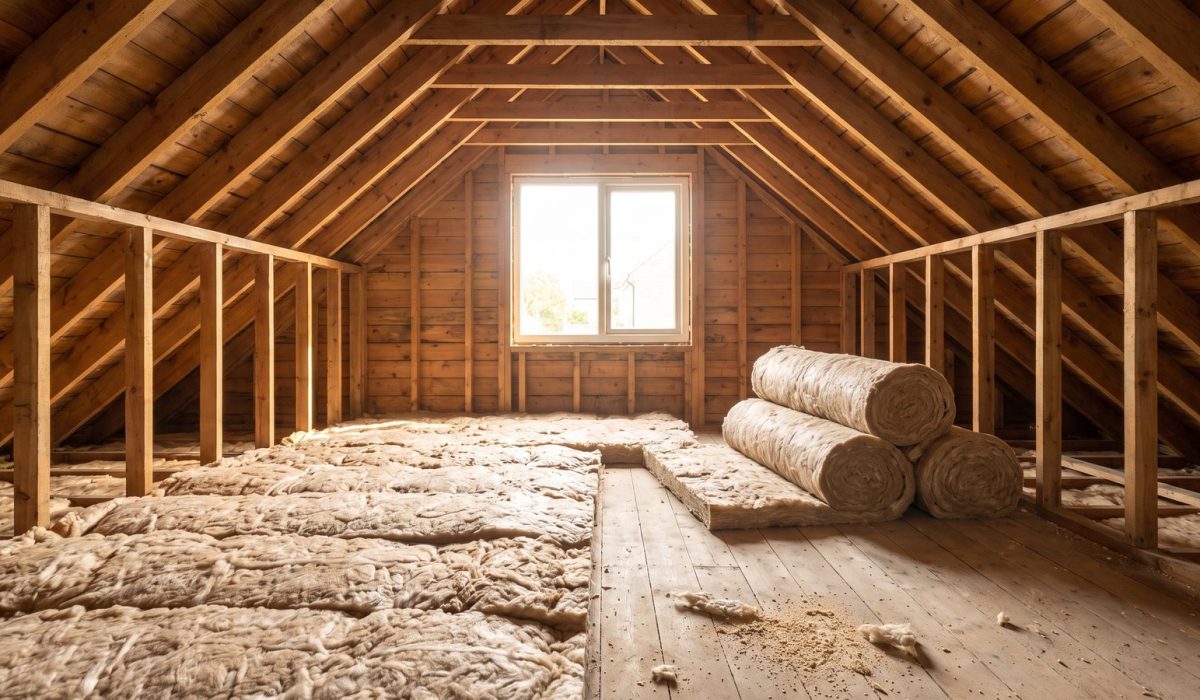
The standard choice. Rolls or batts are laid between the joists and then cross-laid over the top at 270–300mm total depth. Blown loose-fill mineral wool is suitable for hard-to-access areas. Advantages: breathable, non-combustible, cost-effective, universally accepted. Cost for a standard 100m² loft: approximately £300–£800 professionally installed.
Natural fibre insulation
Sheep’s wool, hemp, wood fibre, and cellulose are all breathable, effective, and lender-accepted. They have the added benefit of being hygroscopic — able to absorb and release moisture without degrading, which can be beneficial in a roof environment. Cost: approximately £600–£1,500 for the same area. Suitable for those who prefer natural materials.
Rigid insulation boards at rafter level
PIR or PUR rigid boards installed between rafters at the roof slope, with a maintained ventilation gap above — this is a warm-roof approach. Used where the loft is being converted to habitable space, or where loft-floor insulation is impractical. Requires a professionally designed system with correct ventilation provision. More expensive than loft-floor mineral wool.
Multifoil systems
Thin reflective systems that can sit at rafter level with required air gaps maintained. Suitable for shallow rafter depths; requires correct installation. See our multifoil guide.
Costs in 2026
| Material | Area (100m²) | Typical cost (professional install) |
|---|---|---|
| Mineral wool (rolls/batts, 270–300mm) | 100m² | £300–£800 |
| Blown mineral wool (loose-fill) | 100m² | £350–£700 |
| Natural fibre (sheep’s wool, hemp) | 100m² | £600–£1,500 |
| Rigid PIR/PUR boards (rafter level) | 100m² | Varies — quote required |
| Multifoil (rafter level) | 100m² | £400–£900 |
These are guide ranges — a site assessment provides an accurate figure for your specific loft.
Restoring Your EPC
A loft insulated to the recommended standard (270–300mm mineral wool, or equivalent) makes a material positive contribution to your EPC rating. If the previous spray foam installation was incorrectly installed or was causing ventilation issues, the post-removal, properly re-insulated roof may actually achieve a better EPC than the foam state.
After re-insulation, commission an updated EPC from an accredited assessor. This is required before marketing the property and is a useful benchmark of the improvement achieved.
Choosing an Installer
Re-insulation can be included in a managed removal contract — which is the most convenient approach — or sourced separately from a specialist insulation installer. If you are sourcing separately:
- Confirm the installer understands the importance of maintaining the ventilation void
- Ensure they understand the reason for removal (spray foam) and the specifications for breathable replacement materials
- Get a written specification with materials, depths, and coverage
- Confirm they will not use spray foam as a replacement (some operators may suggest it — avoid it in this context)
The Bottom Line
Re-insulation is not an add-on to spray foam removal — it is a core part of restoring your property to standard. Plan for it from the start, choose breathable materials, and treat it as the final structural step before the RICS certificate.
Request a removal and re-insulation quote or book an inspection to plan the full scope.
This is general information, not financial advice — please consult a qualified mortgage broker about your circumstances.
Related reading: Best mortgage-friendly loft insulation alternatives · Your roof after spray foam removal: repairs & re-insulation · How to insulate a loft properly